
26.2.1. Rope Segment Types#
Mooring lines often include rope segments to reduce weight, improve compliance, and optimize cost. Two main categories are used in offshore applications:
Before considering a design using synthetic wire ropes, it is good to understand the differences as compared to chain or steel wire rope;
As indicated some materials have very high strength, comparable to steel.
A low weight, in particular when submerged. This needs to be considered for permanent but also for installation conditions.
This would indicate easier installation, but the material needs to be well protected and carefully handled because the fibres can be easily damaged.
Synthetic wires are generally much cheaper than steel wire. As an indication steel wire or chain are around three times as expensive as synthetic wire rope.
An important aspect to understand is the visco-elastic behaviour. When synthetic wire rope is slowly brought under tension, the rope will elongate and when the tension is reduced, the rope will retain a permanent stretch. Once the rope is loaded slowly again even more, it will move to the original strength/strain curve and slowly elongate further. If at a mean tension the rope experiences fast dynamic load variation it will not follow the working curve but experiences a much higher dynamic stiffness. The difference between the slower loading stiffness and the faster dynamic stiffness can be a factor two.
26.2.1.1. Steel Spiral Strand Wire Rope#
Steel wire ropes are composed of multiple layers of helically twisted steel wires, often arranged to achieve torque stability. Coatings may be applied to improve corrosion resistance and fatigue life.
Advantages: High strength, established manufacturing standards, predictable stiffness.
Disadvantages: Heavy compared to synthetic ropes (especially in deep water), prone to corrosion, more expensive than synthetic alternatives (~$75/m/MBL).
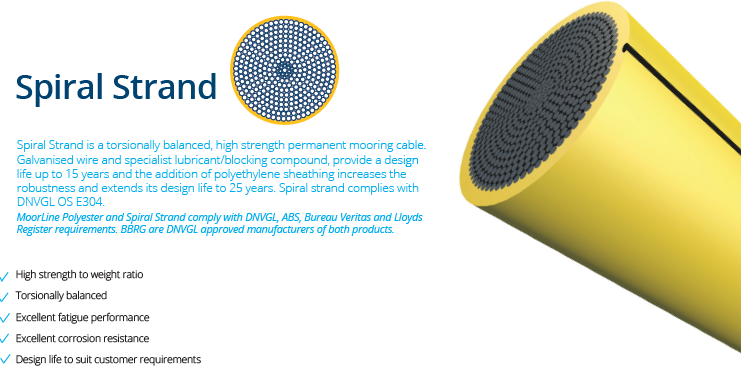
Fig. 26.6 name: fig-spiral-strand Steel wire rope. A spiral strand design with many inner strands. Source: Bekaert#