
25.1. Definition of a Mooring System#
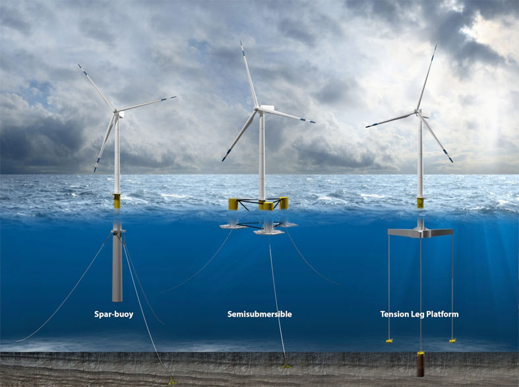
A mooring system is a collection of lines, anchors, and connection hardware designed to keep floating or submerged offshore structures in a desired position relative to the seabed. These systems transfer environmental loads, such as wind, waves, and currents, into the seabed, ensuring the structure remains operational and stable under both normal and extreme conditions. Mooring systems are used in a variety of applications, including floating wind turbines, offshore platforms, and subsea equipment.

Mooring systems are critical for maintaining the position of floating and submerged offshore structures, such as platforms, wind turbines, and subsea equipment. Their design must ensure stability under varying environmental loads from wind, waves, and currents. Key considerations include structural behavior, operational reliability, and long-term durability. Environmental conditions define load extremes, while operational needs dictate motion limits and functionality. Cost-effectiveness is essential, balancing material choice, installation complexity, and maintenance.
Note
💭 What makes a mooring system “good”?
How do we balance the need for a mooring system to minimize movement during regular operations with its ability to survive extreme environmental conditions?
Considering the long-term perspective, what design choices in a mooring system have the biggest impact on its inspection, maintenance, and potential failure risk?
Given that a single mooring system must perform under a range of conditions, what are the most critical trade-offs to consider between a “stiff” system and a more “compliant” one?