29.1.1. Installation Vessels#
There are various methods of installing mooring systems and they depend for a large part on the depth and weights involved.
Note
Requires few days per line and frequent trips back to port for new foundations & lines.
Weather sensitive.
High availability.
Well suited for lighter & smaller moorings.
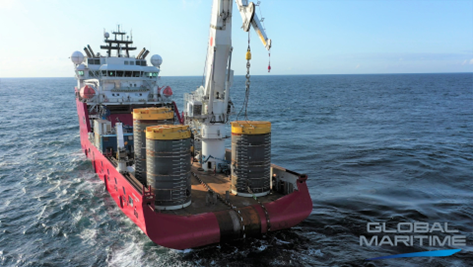
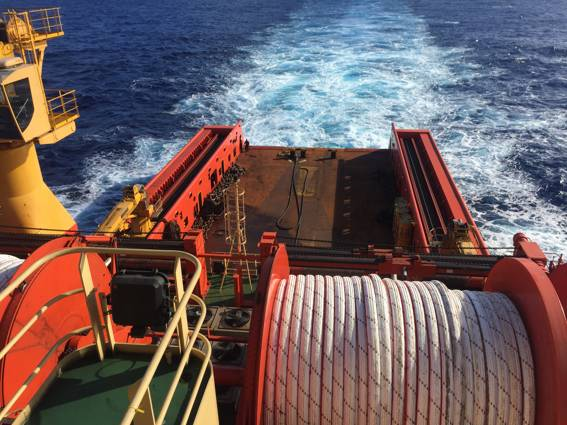
The most economical way of installing temporary or permanent moorings is by using anchor handlers. Once the amount of mooring hardware gets heavier or there are a large number of lines in deeper water, the anchor handlers are required to make more trips to the marshalling area. Next to this the installation vessels are weather sensitive which could make it difficult and limit workability in some offshore areas. There is, however, high availability, and this option is therefore well suited for lighter and smaller moorings in benign areas.
Note
Fast deployment and more capacity to transport from marshalling area
Less weather sensitive than anchor handlers
Can handle deep water moorings
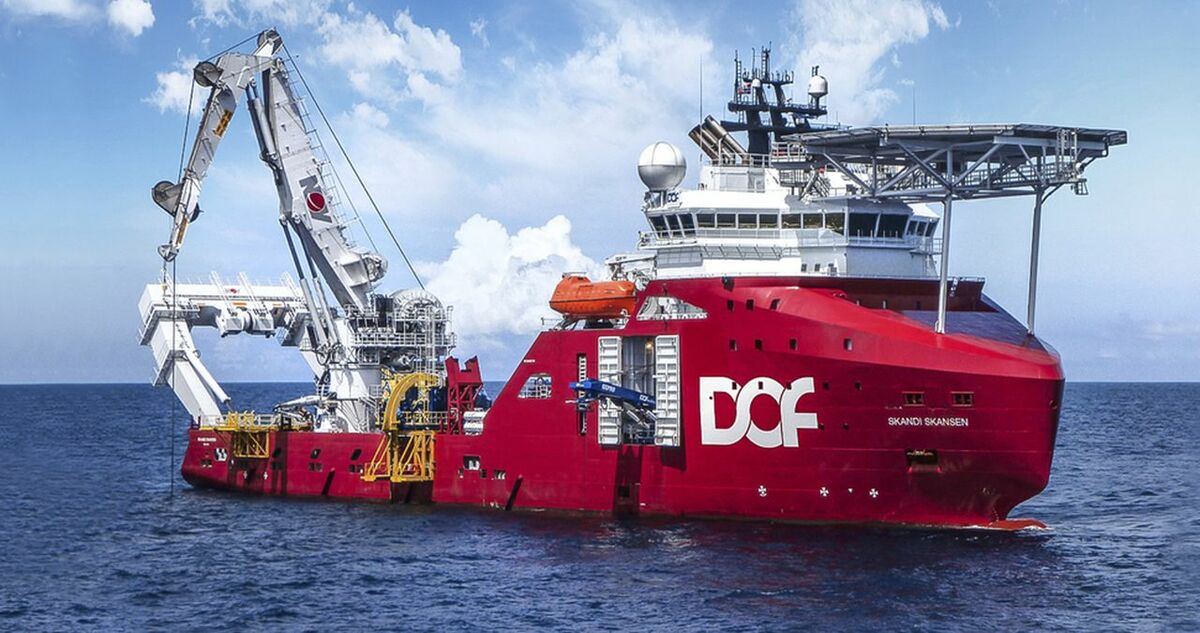
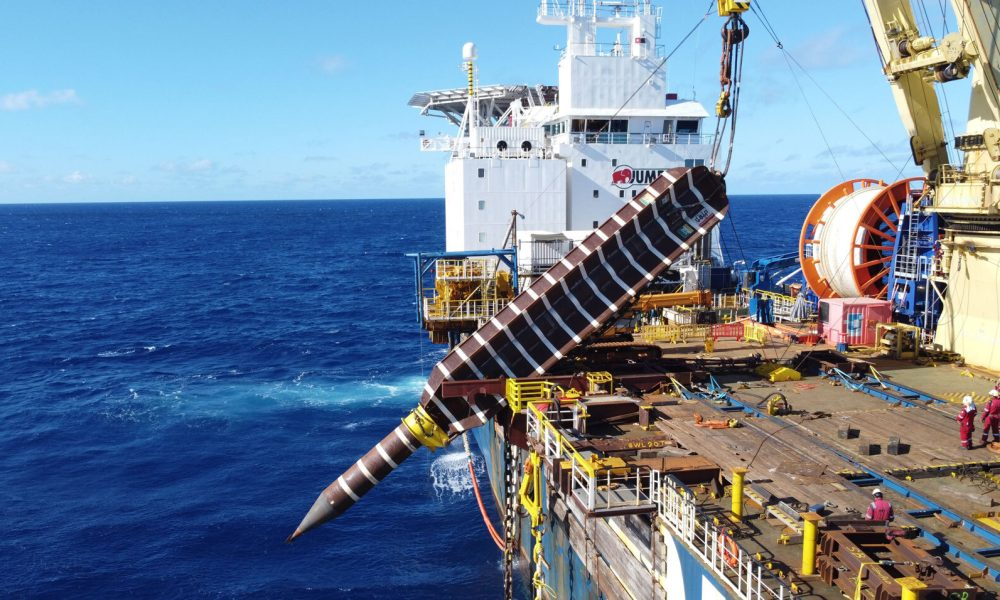
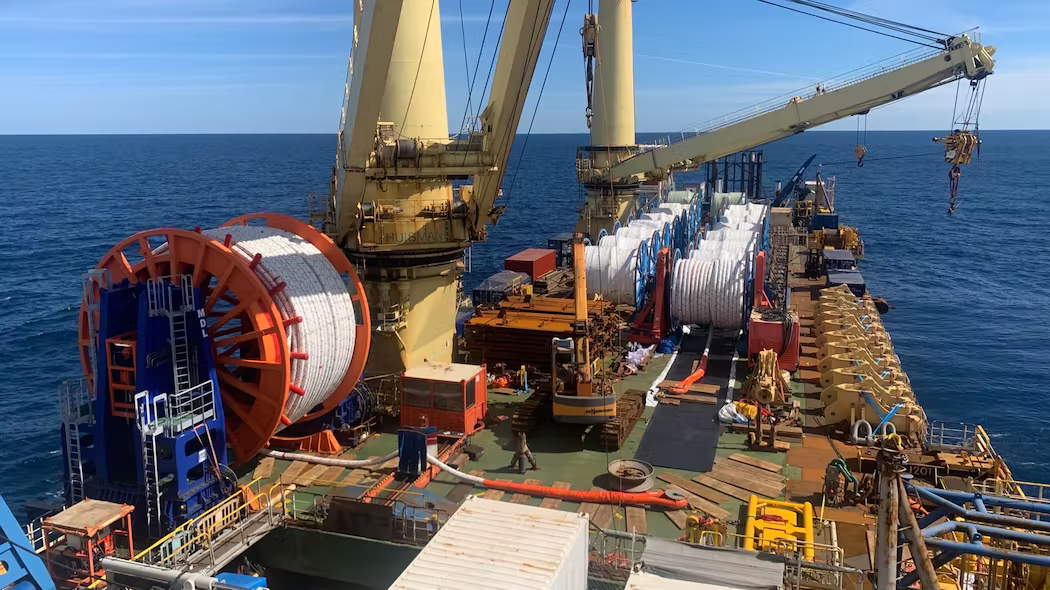
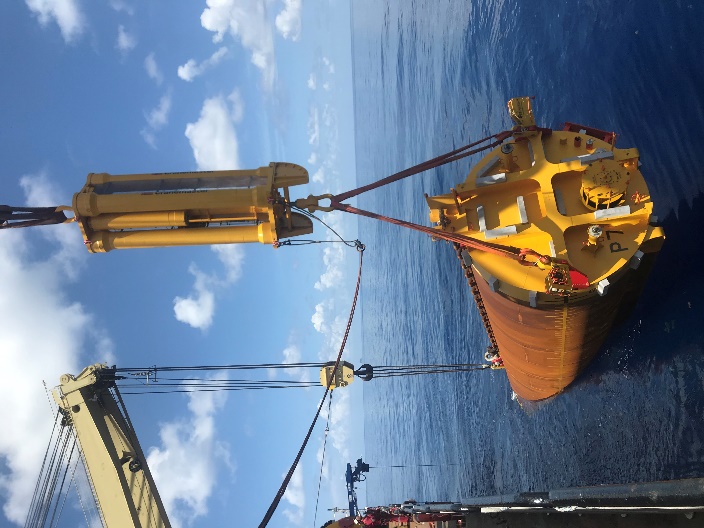
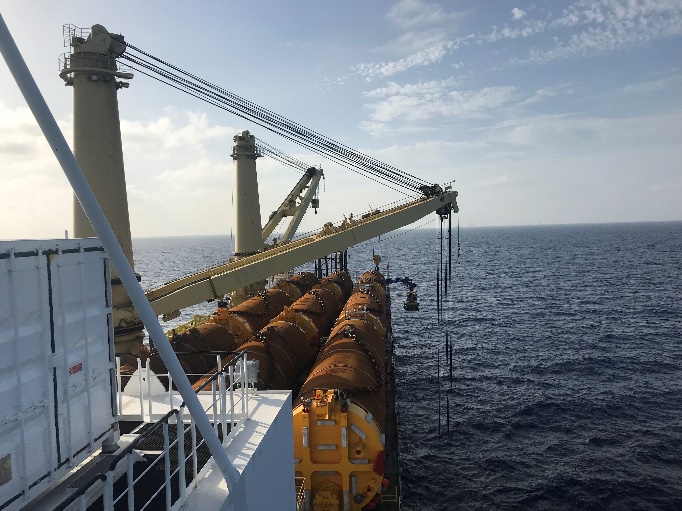
An increase in payload capacity combined with transportability is achieved by using Heavy Lift Vessels. The following shows two moorings being installed by Jumbo Heavy lift vessels, the Vito Semi-Sub in 1220 m of water depth and the Mero FPSO in around 2000 meters of water depth. As shown in the pictures, the Vito foundation consisted of suction piles while the Mero foundation made use of torpedo piles. The lines installed were synthetic wires.
Note
Fast deployment for large moorings in deep water and large deck area
Stable working platform
Limited availability
Once the amount of hardware and the weather sensitivity become important Semi-Submersible Crane Vessels or (SSCV’s) are an option.
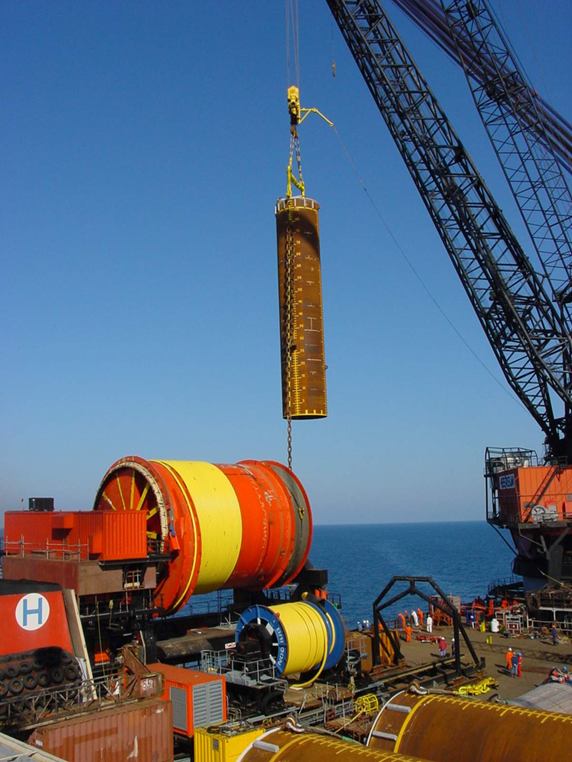
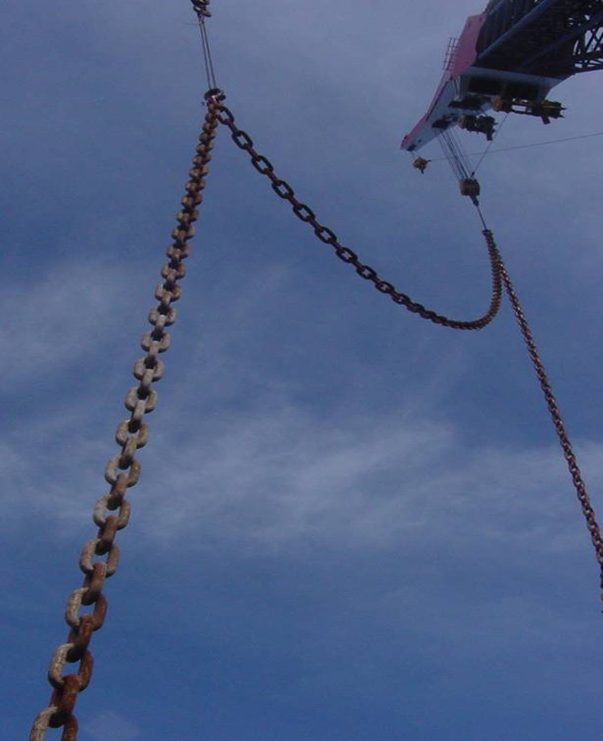
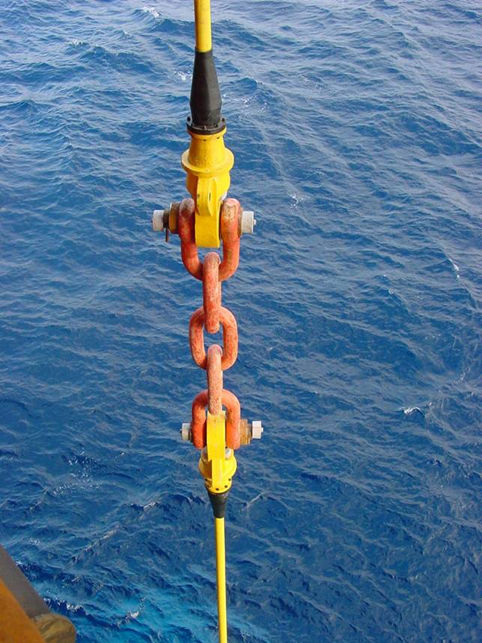
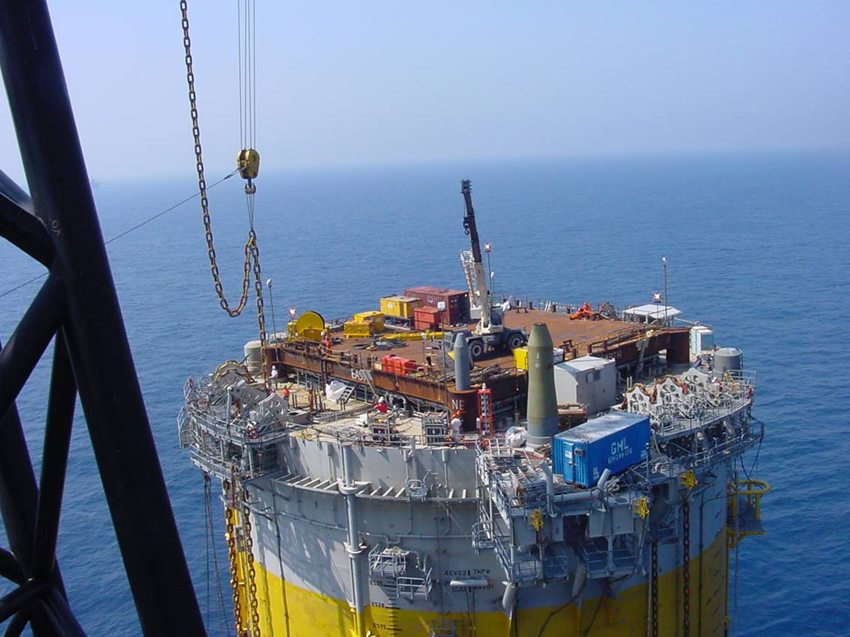
For the Holstein spar, installed in 2004 in 1325 m of water depth, the weight of the chains totaled 4300 tonnes. The installation of suction piles, chain and long lengths of spiral strand wire as well as hook-up with the spar was done using the SSCV Balder. The pictures also show the use of a mooring deployment winch with a diameter of 10,5 meter which ensures that the long length can be installed with minimum twist while also keeping tension on the line while laying on the seabed. The intermediate connections between steel strand wire sections is also shown here. The handling of the chain through the cranes avoided tangling and made sure that the chain could be laid as twist free as possible. An SSCV can store a lot of material on deck. The SSCV is also less sensitive to weather, giving limited downtime, and the installation time is a lot faster than with an anchor handler. The day rates of these vessels are very high, but it is always important to review total costs instead of day rates to decide on the most cost-effective method.