
29.1.2. Tension Leg Platform (TLP) Installation Methods#
This section dives into the installation of a specific type of floaters: TLP’s.
Note
The installation of Tension Leg Platforms can be split in the installation of the foundations, the tendons and the hook-up of the floater.
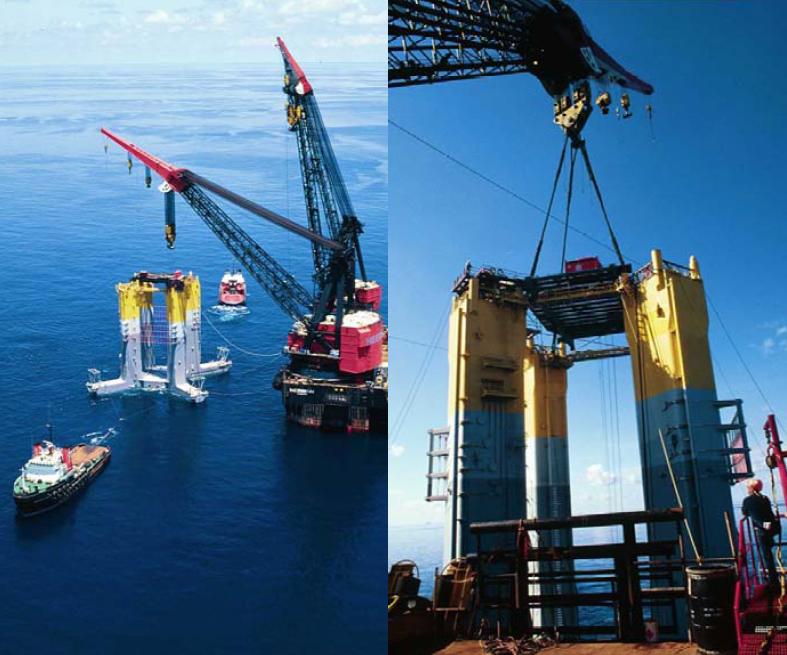
Tension Leg Platforms have been installed using several foundation types, and similar methods may be adapted for floating offshore wind (FOW) structures. Foundations for TLPs include gravity-based anchors, single piles through templates, and single piles directly installed in the seabed depending on soil conditions. For example, the Snorre TLP used very large gravity and suction anchors, installed via lift. Another method used in the past involves placing a steel template on the seabed, which is then piled and provides the connection point for the tendons. More commonly, steel piles are placed directly in the seabed (without a template), initially penetrating under self-weight and then driven to final penetration. The tendons are connected to the top of each pile. Suction piles can also be used but are highly dependent on soil conditions and load levels, making them less suitable for high-load applications.
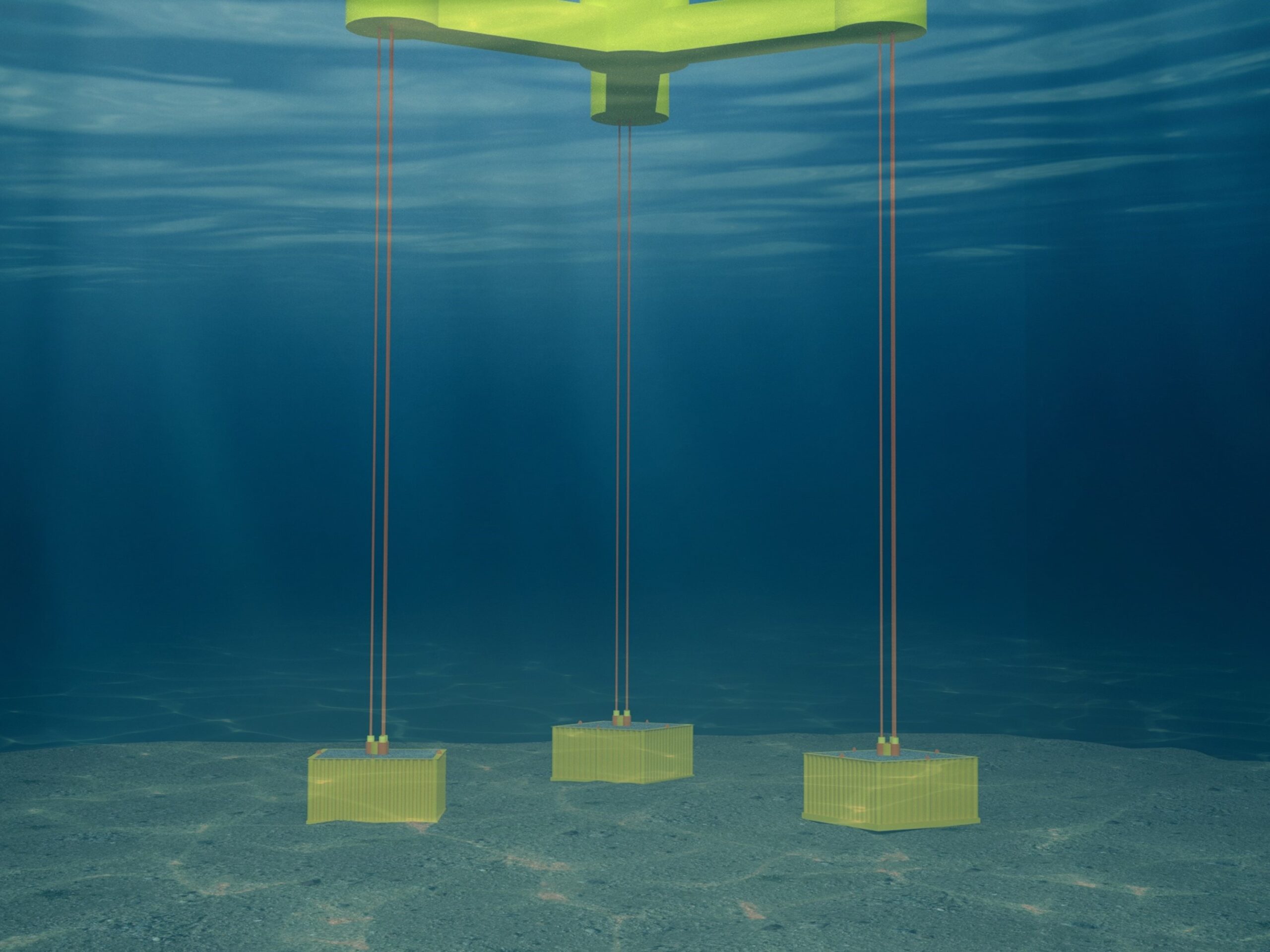
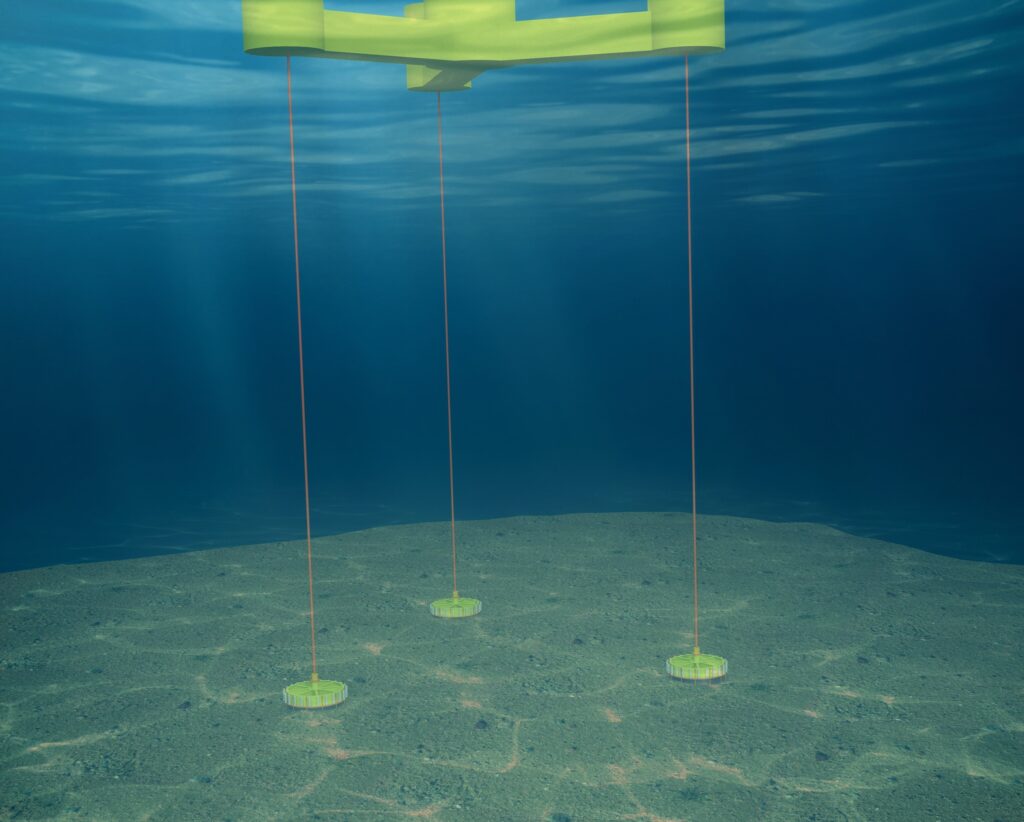
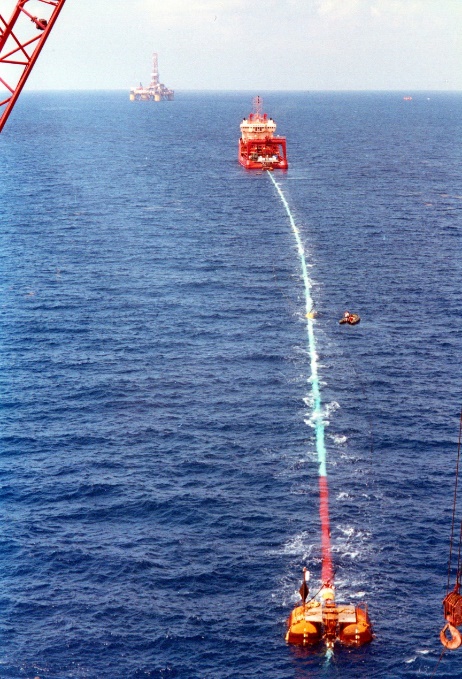
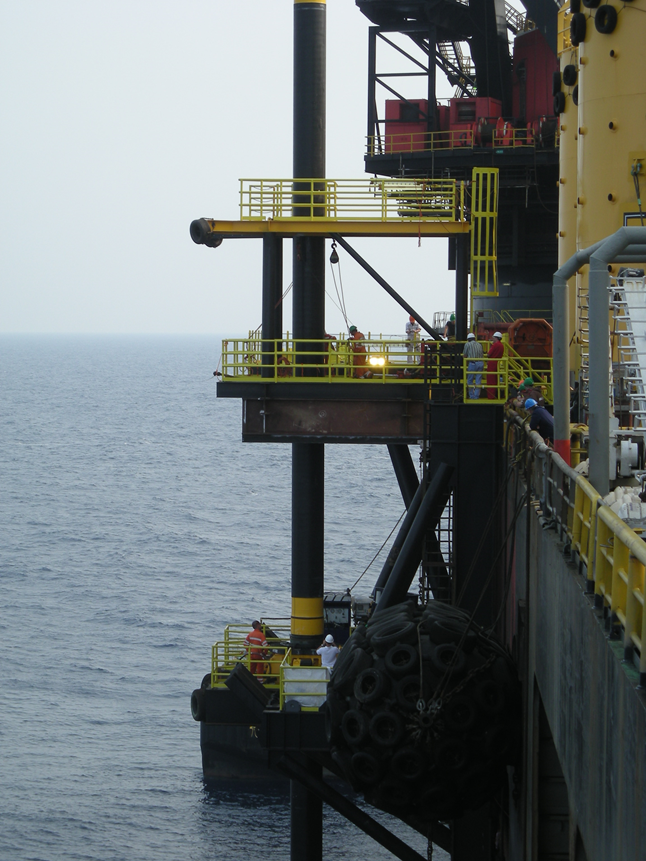
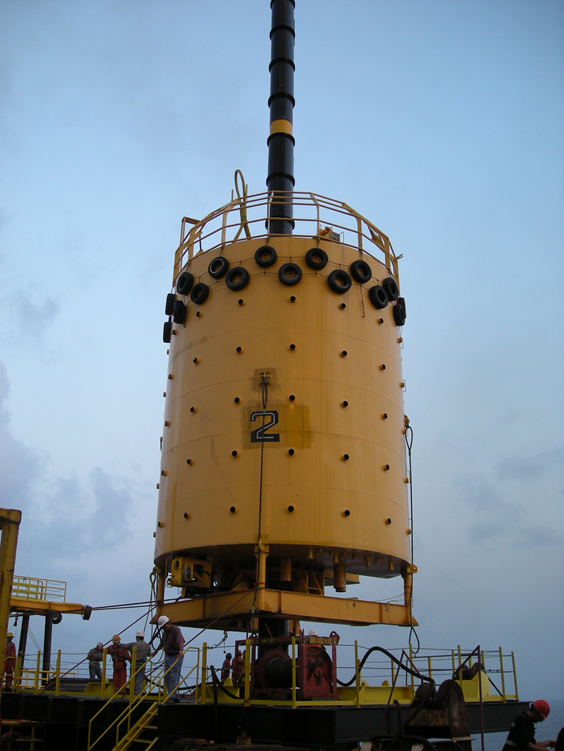
TLP tendons have been installed in different ways. While floating complete tendons out to location has been attempted (e.g., Heidrun and Conoco Jolliet), this method was not always successful. More commonly, tendons are preassembled from segments using mechanical (Merlin) connectors, which provide a high-tension, groove-based connection activated hydraulically. The fully assembled tendons can then be installed at site either by pre-installing them in the foundation using buoyancy tanks to maintain verticality until the TLP is installed, or by hanging them off the TLP itself.
Installation at site (hung-off)
Pre-installation at site (with buoyancy tank)
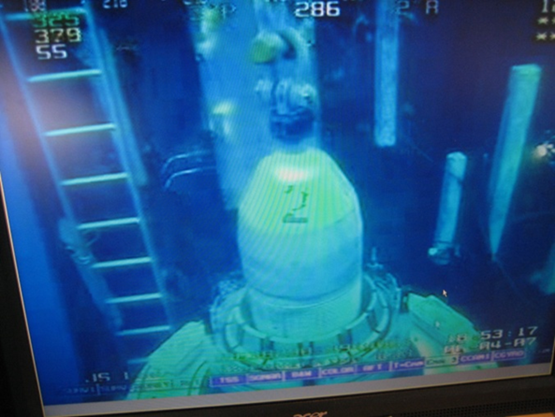
Once the tendons are pre-installed, connection is achieved using a ratcheting system. As the ratchets engage, the vessel can only move down, and when it moves up due to waves, tension is applied to the tendon. By slowly ratcheting down, the desired pre-tension is gradually built up and finally locked off. This procedure is delicate and requires careful control.
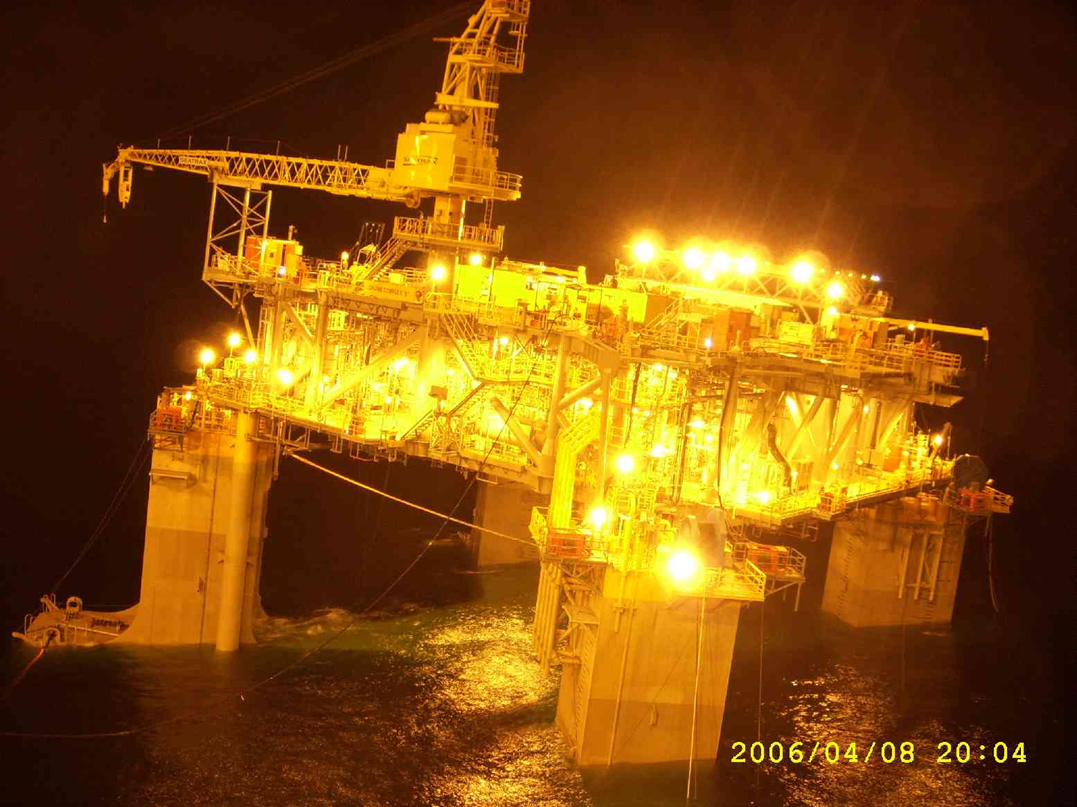
The TLP itself can be installed either as self-installing/free-floating or crane-assisted. Self-installing or free-floating units rely on their own ballast systems to achieve stability during connection, and care must be taken to avoid ratcheting at the moment of lock-off. Crane-assisted installation helps maintain a high GM value and allows the TLP to be lowered over pre-installed tendons. Accurate ballasting is critical to avoid instability, particularly when large differences in waterplane area occur.
Illustrations
Note
Installation tolerances:
Position: ±2 ft (any direction)
Verticality: ±1° (any direction)
Elevation: ±1 ft relative to seabed
In summary, TLP tendons are most often connected to pre-installed piles or anchors using buoyancy tanks and mechanical connectors. The TLP can then be installed self-floating or with crane assistance, with careful ballasting and tensioning procedures to ensure stability and correct pre-tensioning.