
26.5. System Aproaches#
When designing a mooring system it is important to consider what you want to achieve. In most cases the mooring system is intended to keep a floating body within a certain area. As soon as the body moves out of this area the restoring forces increase to bring it back to its mean position. It achieves a stable equilibrium.
This is what we could call a hardening system. But in designing, it is also sometimes an advantage to create a softening system, which limits the forces but allows more movement. Mooring systems can be designed to achieve this over a part of its excursions.
The intent could be that the mooring lines should remain off the ground, which can be achieved through taut systems or through the use of intermediate buoys.
One of the important functions for a mooring system is often the limiting of displacements due to the requirements on risers and/or electric cables.
In the next session we will consider the following systems: The multi-line mooring system, the wishbone system and the tension leg system. A body to body mooring is often a line system between vessels, which we will not work out further here.
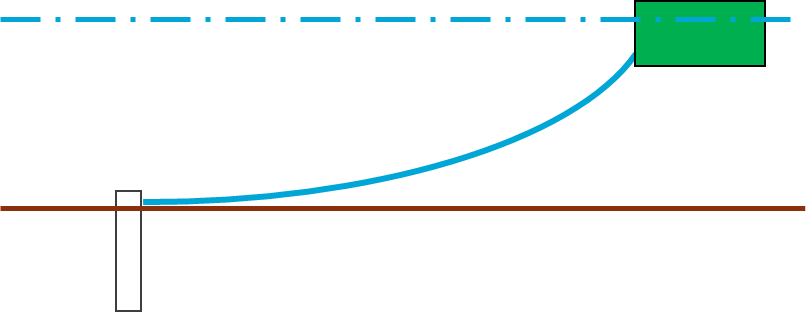
Fig. 26.9 name: fig-single-catenary A single-line catenary mooring system allowing ‘weathervaning’. The floating platform aligns with the prevailing forces, moving freely towards the direction of least resistance.#
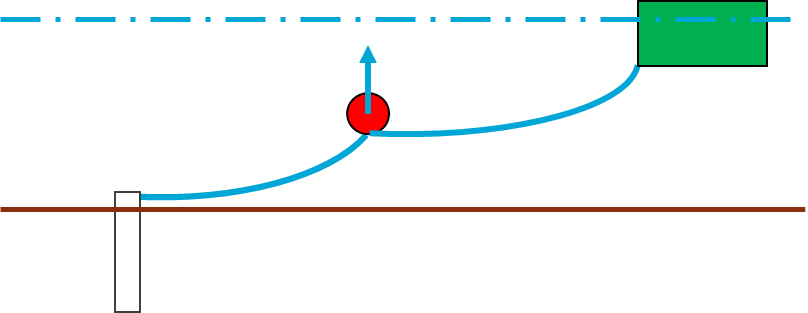
Fig. 26.10 name: fig-catenary-buoy A catenary mooring line equipped with a buoy to provide additional vertical restoring force, improving stability of the floating platform. The buoy can also be used for obstructions at the seabed, lifting the mooring at specified locations along the line.#
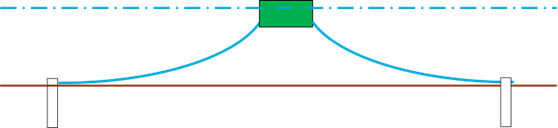
Fig. 26.11 name: fig-dual-catenary A dual-line or multi-line catenary mooring system for a floating platform. Two curved mooring lines anchor to the seabed, limiting rotation compared to a single-line weathervaning setup. The catenary shape results from the line’s self-weight.#
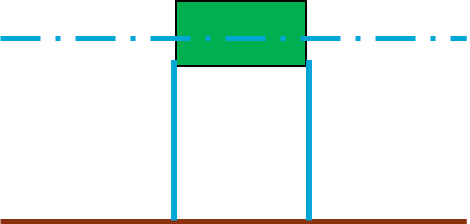
Fig. 26.12 name: fig-tlp A Tension Leg Platform (TLP) system, where vertical tendons constrain the platform and allow only minimal horizontal motion, providing high positional stability.#
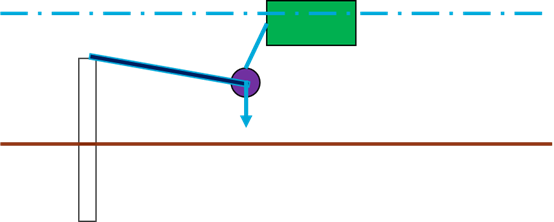
Fig. 26.13 name: fig-clump-weight A mooring system with an attached clump weight to increase restoring force, enhancing line tension and reducing platform drift. This is also called a wishbone system.#

Fig. 26.14 name: fig-vessel-connection A mooring arrangement connecting two floating vessels, ‘body to body’. Blue lines represent the mooring lines or connecting structure, commonly used to maintain relative positions between vessels.#
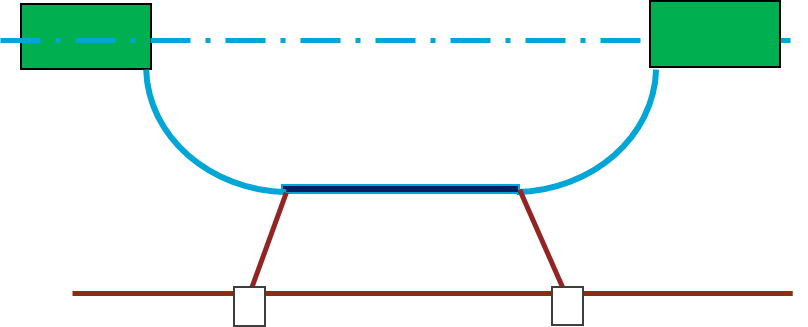
Fig. 26.15 name: fig-shared A mooring system where anchors are shared through an intermediate connection. By sharing foundations, installation and required mooring length can be optimized.#